
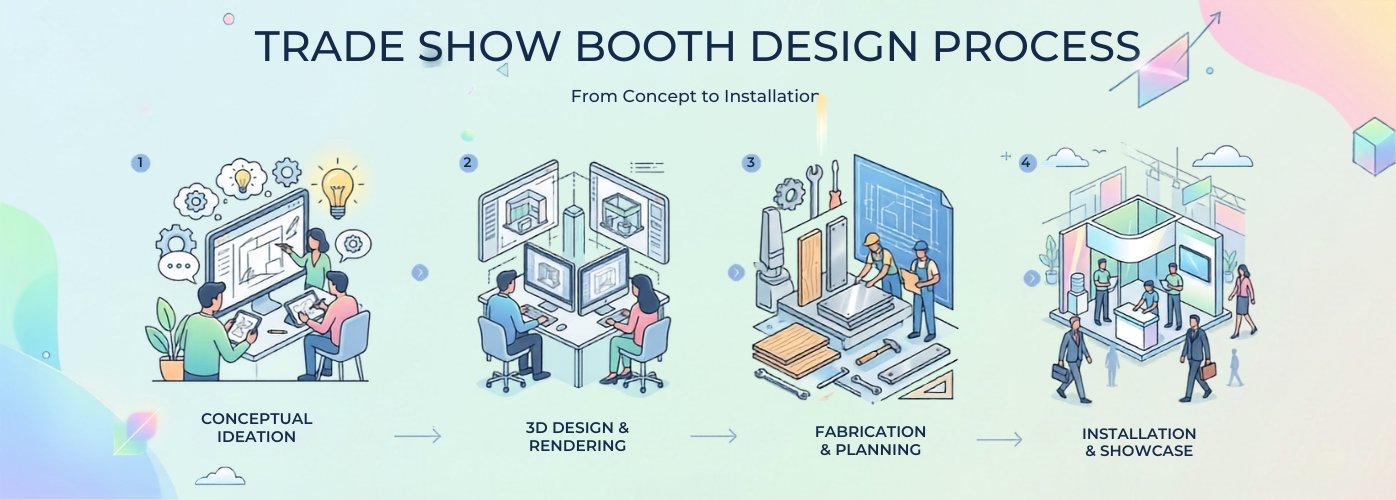
Trade Show Booth Design Process: From Concept to Installation
A successful trade show booth does not begin on the exhibition floor. It starts weeks or months earlier with careful planning, creative strategy, technical coordination, fabrication, logistics, and installation. The trade show booth design process brings together branding, architecture, engineering, visitor experience, and project management to create a space that attracts attention and supports business goals. Every detail—from the booth layout and lighting to graphics, product displays, and meeting areas—must work together to communicate a clear brand message. Whether you are exhibiting for the first time or participating in multiple exhibitions across the United States, understanding the complete trade show booth design step-by-step can help you avoid delays, control costs, and improve your return on investment. This guide explains how custom trade show booths are built—from the initial concept to on-site installation, event support, dismantling, storage, and future reuse. Why the Trade Show Booth Design Process Matters A trade show booth is more than a temporary physical structure. It is a three-dimensional representation of your brand and often the first point of interaction between your company and prospective customers. Following a structured exhibition booth design process ensures that the final booth is visually appealing, technically safe, operationally practical, and aligned with your event objectives. First Impressions Drive Results Trade show visitors are surrounded by competing brands, product demonstrations, digital screens, and sales messages. Your booth has only a few seconds to capture their attention. Professional trade show booth design uses strong graphics, distinctive architecture, effective lighting, and clear messaging to create an immediate visual impact. A well-designed booth helps visitors understand who you are, what you offer, and why they should stop. Better Planning Means Better ROI Every element of the booth should serve a purpose. Product displays should encourage demonstrations, meeting areas should support business conversations, and branding should remain visible from multiple directions. Careful planning helps businesses use their booth space effectively and avoid unnecessary expenditure. It also allows the design team to align the booth with lead generation, brand awareness, product launches, networking, and sales objectives. End-to-End Project Management Saves Time The booth design and fabrication process involves multiple vendors, approvals, technical requirements, venue regulations, shipping schedules, and installation teams. Working with a full-service booth builder gives exhibitors a single point of contact throughout the project. This reduces coordination problems, saves internal resources, and helps ensure that every stage is completed according to schedule. Step 1: Discovery & Consultation Understanding Business Goals Before designing the booth, the project team must understand what the exhibitor wants to achieve. Common objectives include: The booth layout, visitor experience, and communication strategy should be built around these objectives. Learning About the Target Audience A booth designed for engineers and technical buyers may require detailed product demonstrations and specification displays. A booth targeting consumers may need more engaging visual storytelling, interactive experiences, or sampling areas. Understanding the target audience helps determine the tone, layout, technology, content, and level of interaction required within the booth. Reviewing Show Requirements Every exhibition has its own rules regarding booth height, open sides, hanging signs, electrical connections, fire safety, flooring, rigging, and material usage. The booth builder reviews the exhibitor manual, hall layout, booth location, ceiling restrictions, neighboring exhibits, and organizer deadlines before beginning the design. This ensures that the proposed concept is suitable for the allotted space and complies with exhibition regulations. Budget Planning Establishing a realistic budget at the beginning helps the design team recommend suitable materials, features, and construction methods. The budget should account for: Transparent budget planning reduces unexpected costs and allows the exhibitor to prioritize the features that create the greatest impact. Step 2: Strategy & Concept Development Once the requirements are understood, the booth builder begins developing the strategic direction and creative concept. This stage transforms business objectives into an initial booth experience. Brand Story Development A booth should communicate a clear and consistent brand story. Visitors should be able to understand the company’s positioning without reading lengthy explanations. The design team studies the brand identity, products, services, audience, competitors, and event objectives. These insights are then translated into visual elements, messaging, displays, and visitor interactions. Creative Theme Selection The creative theme establishes the overall look and feel of the booth. It may be modern and technology-focused, premium and minimal, industrial and functional, or vibrant and experiential. Colours, forms, graphics, materials, lighting, and digital content should support the selected theme while remaining consistent with the brand guidelines. Visitor Journey Mapping A successful booth guides visitors through a planned experience. The visitor journey may include: Mapping this journey helps reduce congestion and creates clear opportunities for interaction and lead generation. Space Planning The available booth space must be divided according to its functions. Depending on the exhibitor’s requirements, the layout may include: Good space planning balances visibility, accessibility, visitor comfort, privacy, and operational efficiency. Step 3: 3D Booth Design & Visualization After the concept is finalized, the design team converts it into detailed three-dimensional visuals. This is one of the most important stages of custom trade show booth design because it allows the client to review the proposed experience before production begins. Creating Initial Concepts Initial concepts are developed based on the booth dimensions, branding guidelines, products, visitor flow, and event objectives. Designers explore different architectural structures, colour combinations, display formats, graphic placements, and lighting ideas. The selected concept should be distinctive while remaining realistic within the approved budget and timeline. 3D Rendering & Walkthroughs High-quality 3D renderings show how the booth will look from different angles. They can illustrate the entrance, reception counter, product displays, meeting spaces, overhead branding, graphics, lighting, and digital screens. A virtual walkthrough can also help exhibitors understand the visitor experience and movement through the booth. These visualizations make it easier to evaluate design decisions before fabrication. Design Revisions Clients may request changes to the layout, colours, graphics, displays, furniture, lighting, or branding. A structured revision process allows the design team to incorporate feedback while protecting the original objectives, budget, technical feasibility, and event timeline. Delays